Paddling in Oregon
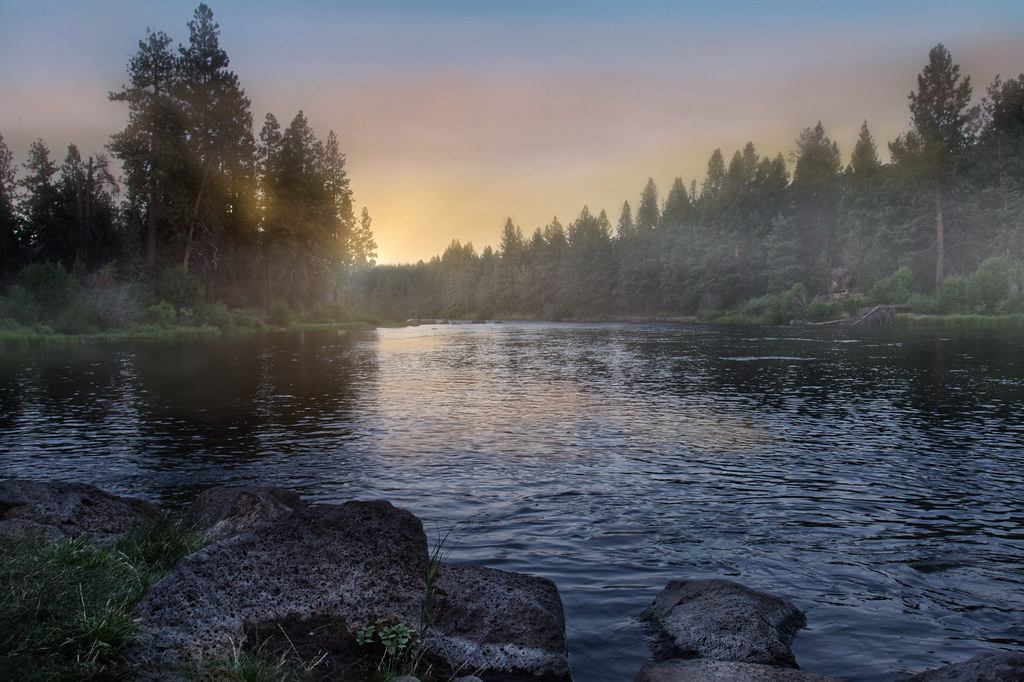
- Lakes
- 5,079
- Rivers
- 12,659
- Access
- 565
- Boat Ramps
- 957
- Shops
- 33
Oregon might be the richest whitewater state in the Lower 48 by sheer variety per square mile.
Sixty-eight federally designated Wild & Scenic rivers and creeks fan out across the state, which means Class III water sits within two hours of almost anywhere you happen to be — and the scenes built around that water rarely overlap.
The center of gravity is the Rogue.
The 32-mile wild section from Grave Creek to Foster Bar — one of the original eight rivers designated Wild & Scenic in 1968 — runs on a competitive BLM lottery from May 15 to October 15, with applications due in January and results dropping in early February.
About 20,000 people float it a year.
They go for Mule Creek Canyon's wall-to-wall boils, for Blossom Bar's hard right above the Picket Fence (BLM recommends every party scout it, every flow), for the option of bypassing Rainie Falls down the Fish Ladder Glen Wooldridge blasted open, and for the lodge-to-lodge thing — private inns reachable only by trail or river.
Bears visit the sand beaches. *Soggy Sneakers* lives in the dry bag. Orange Torpedo has been putting people in inflatable kayaks down here since 1969. The Deschutes is the other through-line, and it splits into two completely different paddling cultures.
Below Warm Springs, the lower canyon is the state's most popular day-trip river — spring-fed, reliably runnable, Whitehorse and Oak Springs the named rapids, with multi-day camping standard through volcanic basalt.
Upstream in town, the Bend Whitewater Park's three channels — Fish Ladder for families, the computer-adjustable Whitewater Channel for surfers and playboaters, Habitat for the fish — see more than a quarter million river users a summer.
Tumalo Creek runs skills clinics on the waves. The whole complex replaced a 1911 dam. Then there's the Owyhee, which is its own thing entirely.
Five million acres, three paved roads, 2,000-foot canyon walls, a season that opens with snowmelt in March and slams shut by late May. If you draw the window, drop everything; missing it costs you a year.
Trips run three to ten days because there's no road access mid-canyon. The Snake through Hells Canyon — deeper than the Grand — sits at the other corner of the state with the biggest water in the Northwest at Wild Sheep and Granite.
For Portland paddlers, the Clackamas is 45 minutes out the door — 13 miles of continuous Class II–III with the Toilet Bowl waiting in the upper section — and the coast and Columbia estuaries are an hour the other way.
OKCC has been running trips for over fifty years; OOPS handles the sea kayak side, which on this coast means cold water, surf, and a drysuit.
The piece most visiting paddlers miss is the Willamette Water Trail: 187 miles of canoe and SUP country from Eugene to Portland, primitive first-come campsites, no permit, no portage.
Wood and gravel bars early, motorboats through the Newberg Pool, three to four feet of tide in the lower 26. Pack the waste out. The southern reaches feel genuinely under-the-radar even to Oregonians. Bring two boats.
A hard-shell for the creeks off Hood and the lower Clackamas, and a raft for the Rogue permit you applied for in January.
Paddle smarter with real-time insights
Whether you're en route and conditions shift or you're looking for the best spot based on current flows, we enable you to make informed decisions on the fly.







Oregon licenses and regulations
National parks in Oregon
Explore Oregon waters
Top paddling waters
Popular Cities
Loading popular cities...
Smarter Paddling Starts in the App.
Paddleways gives you everything you need to plan smarter, paddle better, and own every trip from first launch to takeout.