Meadowbank River
- Lake
- Lake
- Boat Ramps
- 0
- Access Points
- 0
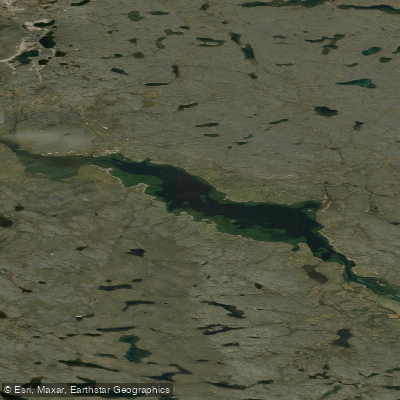
The Meadowbank River in Nunavut, Canada is a remote Arctic waterway approximately 137 miles (220 km) in length that flows generally northward to join the Back River near Mount Meadowbank. It is a significant tributary of the Back River system and has been traveled by paddlers both ascending from the Back River and descending from its headwaters toward Baker Lake.
The river's character changes considerably along its length. Near the headwaters, the Meadowbank is small and shallow, at times barely navigable, with sections where the water disappears under boulders and paddlers must wade, line, or portage. As the river gains volume downstream, it becomes a more substantial waterway, passing through a series of lakes connected by rapids and swift sections. The channel is wide in places and rocky throughout, with numerous rapids requiring lining, wading, or portaging. One experienced party completed 137 miles of the river in 8 days, which gives some sense of the pace possible under reasonable conditions.
Strong winds are a persistent and serious challenge on the Meadowbank. Open lake crossings and exposed stretches can make paddling difficult or dangerous, and wind-bound days should be expected. Portage trails exist at some of the more formidable rapids, including at least one that routes up and over rocky cliffs on river right. The upper river near the headwaters involves a height-of-land portage.
Wildlife along the river is notable. Muskoxen are frequently encountered, with one party observing 27 in the upper reaches alone. Loons, whooping cranes, and ptarmigan with chicks have also been reported. Inukshuks on ridgelines above the river attest to a long history of Inuit presence in the corridor.
The river connects to the Back River at a point near Mount Meadowbank, a prominent landmark named by explorer George Back during his 1833–1835 expedition. The area carries considerable historical significance as a travel corridor used by both Indigenous peoples and early European explorers, including a party associated with Frederick Schwatka's 1880 Arctic journey.
The Meadowbank is typically paddled as part of a longer expedition, either as an approach to or exit from the Back River. Given its remote Arctic location, self-sufficiency is essential, and paddlers should have strong whitewater skills and experience managing expedition-length travel in subarctic conditions.
Hazards
Hazards on Meadowbank River
No hazards are marked on Meadowbank River yet. That is not the same as none being there: if you find one, report it for the next paddler.
From the community
Meadowbank River trip reports
Nobody has shared a trip on Meadowbank River yet. Paddle it, then tell the next paddler how it went.
Paddling conditions (10 day forecast)
Weather and wind, so you know what to expect on Meadowbank River today.
No forecast data available.
Paddle smarter with real-time insights
Live flows, marked hazards and fresh trip reports from paddlers who were just on the water, all in one place.







Find Places to Paddle

Over 400,000 Places to Paddle
Every user gets free access to launch points, boat ramps, and public property parcels.


Explore Canada waters
Top paddling waters
No waters available right now.
Explore near Meadowbank River
Smarter Paddling Starts in the App.
PaddleWays gives you everything you need to plan smarter, paddle better, and own every trip from first launch to takeout.