Paddling in Florida
- Lakes
- 3,859
- Rivers
- 3,343
- Access
- 142
- Boat Ramps
- 3,399
- Shops
- 10
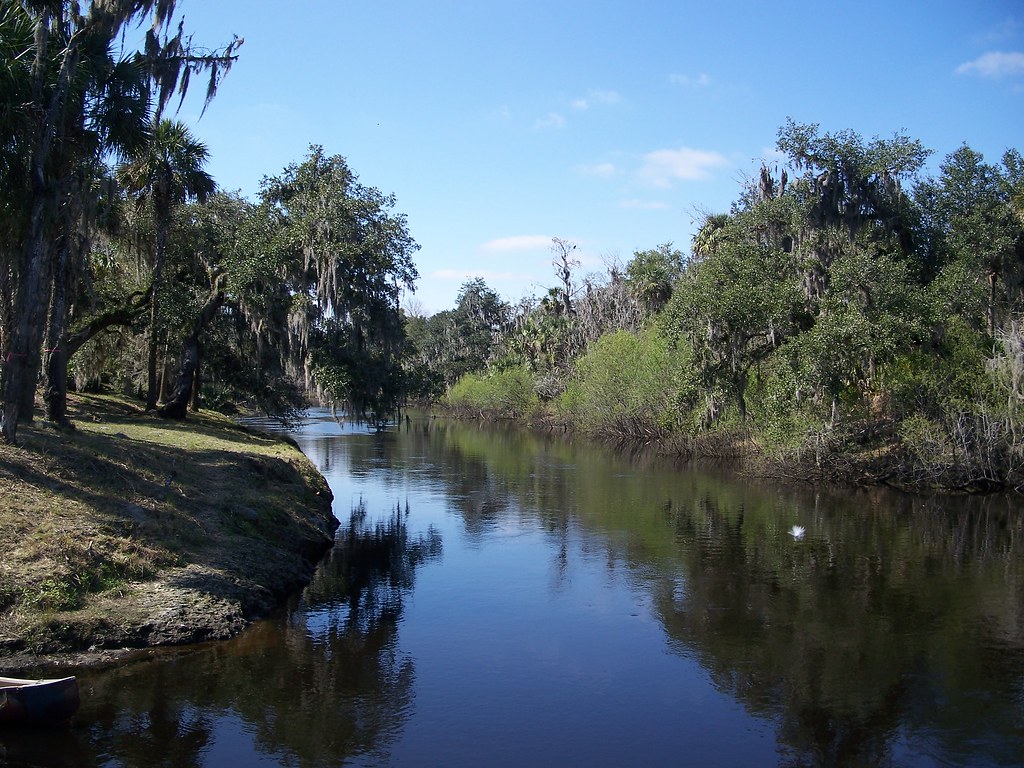
Florida is a flatwater and saltwater state — spring runs, blackwater rivers, mangrove backcountry, and a coastline you can paddle around in its entirety.
Whitewater barely exists here, and that's the point: the state's identity is built on ecological intimacy and serious distance, not gradient. The spring runs are the gateway.
The Ichetucknee is the canonical one — a six-mile run of 72°F water so clear you steer more than stroke, with a daily cap of 100 boats from the north launch keeping it from feeling like a parade.
Summer belongs to the tubers; fall and winter belong to paddlers who want gar and turtles in near-silence. The Wekiva, Rainbow, and Crystal rivers run on the same logic.
These are the trips that hook people on Florida paddling, and they're also where the conservation culture lives most visibly — the Florida Springs Institute runs SpringsWatch citizen monitoring on the Ichetucknee, and manatee etiquette on the runs is a legal obligation under state and federal law, not a polite suggestion.
For multi-day river work, the Suwannee River Wilderness Trail is the flagship — 170 miles of blackwater from White Springs to the Gulf, lined with limestone bluffs, sandbars, and a chain of five hosted river camps roughly ten miles apart with screened sleeping platforms and showers.
(Worth checking before you launch: Holton Creek River Camp has been closed since the 2024 hurricane season, with reopening expected in early 2026.
) The Suwannee is also where Florida's lone whitewater curiosity lives — Big Shoals goes Class III only when the White Springs gauge sits between 59 and 61 feet, and above 65 you shouldn't be on the river at all. Check the gauge before you commit.
The big trips happen on salt water.
The Circumnavigational Saltwater Paddling Trail wraps the entire peninsula in 26 segments — Paddling Magazine has called it the sea kayaker's Appalachian Trail — and the Big Bend stretch from the Aucilla down to Suwannee is the one CT thru-paddlers tend to talk about, with primitive campsites (free permit, top-to-bottom only) along the most undeveloped shoreline left in the eastern US.
The CT also includes a 70-mile gauntlet between Miami and Lake Worth, the "Concrete Canyon," where seawalls bounce powerboat wakes back at you — some thru-paddlers run it at night.
Then there's the Everglades Wilderness Waterway: 99 miles of mangrove tunnels and tidal creeks between Flamingo and Everglades City, eight days minimum, recreation.
gov permits for the chickees, and nautical charts 11430/11432/11433 because GPS quits inside the mangroves. The Nightmare and Broad Creek only go at high tide.
Locals will tell you the alligators aren't the problem — getting turned around in identical mangrove passages is. Plan for November through April. Outside that window, the heat, mosquitoes, and afternoon lightning will make the decision for you.
Paddle smarter with real-time insights
Whether you're en route and conditions shift or you're looking for the best spot based on current flows, we enable you to make informed decisions on the fly.



Florida licenses and regulations
Explore Florida waters
Top paddling waters
Popular Cities
Loading popular cities...
Smarter Paddling Starts in the App.
Paddleways gives you everything you need to plan smarter, paddle better, and own every trip from first launch to takeout.