Dubawnt River
- Lake
- Lake
- Boat Ramps
- 0
- Access Points
- 0
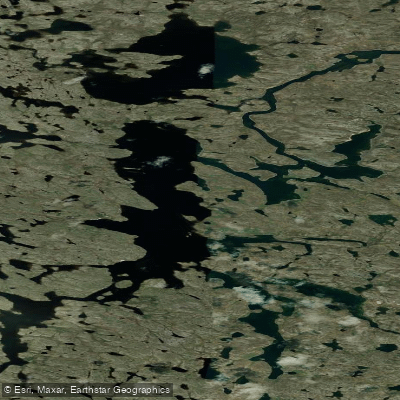
The Dubawnt River is one of Canada's major sub-arctic wilderness canoe routes, flowing approximately 840–874 km northeast from a web of lakes near the Saskatchewan–Northwest Territories border through the barrenlands before turning northwest to join the Thelon River at Beverly Lake in Nunavut. The standard canoe route from Selwyn Lake or Hinde Lake (accessed by floatplane) to Baker Lake covers roughly 1,160 km and typically takes 35 to 42 days, though parties completing only the Dubawnt portion may finish in 23 to 38 days depending on wind delays and pace.
The river passes through both boreal forest and open tundra, traversing a chain of massive lakes — including Dubawnt Lake, the 37th largest lake in the world — where open-water crossings can be severely delayed by wind. The character of the moving water varies considerably: some stretches are fast but straightforward, while a notable 110 km section below Shults Lake offers sustained Class I–II whitewater. The most serious hazard is Dubawnt Canyon, located between Dubawnt Lake and Grant Lake, where entry into the canyon proper is described as fatal. The portage runs up to 4 km along the right bank on a raised gravel esker, and a cairn marks the start. The Dubawnt Gates — two monolithic rock formations rising roughly 25 m from the water and flanking a constriction of large hydraulics — require mandatory scouting; the conservative approach is a 50 m portage across the point extending into the main ledge, as running the ledge exposes paddlers to 2 m recirculating holes with rock walls on either side. In total, most parties encounter four portages on the route.
This route is rated advanced across all categories: river travel, lake travel, portaging, and remoteness. Solid whitewater skills, extensive wilderness camping experience, and sound judgment in remote conditions are all prerequisites. It should not be the first north-of-treeline trip for any paddler. Resupply is not available along the route, and on average only about one crew completes the Dubawnt/Thelon trip per year.
Wildlife along the route includes muskox, grizzly bears, caribou, and arctic foxes. The route ends at Baker Lake, an Inuit hamlet where Calm Air and Canadian North operate scheduled flights to Winnipeg and Rankin Inlet. Baker Lake Lodge can store canoes and arrange southbound shipment by cargo barge. Budget extra days in Baker Lake for weather delays and logistics.
Hazards
Hazards on Dubawnt River
No hazards are marked on Dubawnt River yet. That is not the same as none being there: if you find one, report it for the next paddler.
From the community
Dubawnt River trip reports
Nobody has shared a trip on Dubawnt River yet. Paddle it, then tell the next paddler how it went.
Paddling conditions (10 day forecast)
Weather and wind, so you know what to expect on Dubawnt River today.
No forecast data available.
Paddle smarter with real-time insights
Live flows, marked hazards and fresh trip reports from paddlers who were just on the water, all in one place.

Find Places to Paddle
Over 400,000 Places to Paddle
Every user gets free access to launch points, boat ramps, and public property parcels.
Nt licenses and regulations
No licenses or regulations available for Nt.
Explore Canada waters
Top paddling waters
No waters available right now.
Explore near Dubawnt River

Smarter Paddling Starts in the App.
PaddleWays gives you everything you need to plan smarter, paddle better, and own every trip from first launch to takeout.