Paddling in Aysén
- Lakes
- 211
- Rivers
- 193
- Access
- 74
- Boat Ramps
- 5
- Shops
- 0
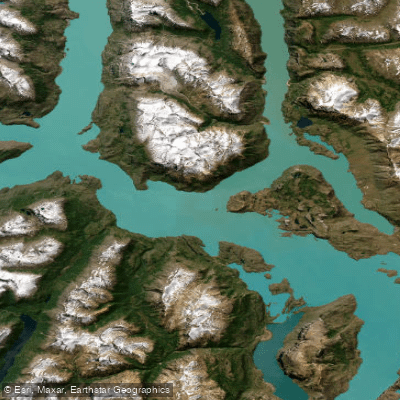
Aysén is glacier country.
This southernmost region of Chilean Patagonia holds more fresh water than almost anywhere on the continent — locked in ice fields, draining through rivers the color of turquoise glass, pooling in lakes so large they cross international borders.
The paddling here spans the full spectrum: sea kayaking through fjords and channels, flatwater touring on enormous lakes, and serious whitewater on rivers that have barely been run.
The Carretera Austral threads through much of it, which helps with logistics, but "accessible" is relative — this is still the least populated region in Chile. The Río Baker is the anchor of the whitewater scene.
Fed by Lago Bertrand and running roughly 200 kilometres to the sea at Caleta Tortel, it carries an average flow around 870 cumecs — the highest of any river in Chile.
That volume means power even on the calmer stretches, and rapids like Colonia and Gonzales demand respect. Multi-day expeditions on the Baker involve wild camping on the banks, portages, and the kind of commitment that comes with being genuinely far from help.
The reward is granite walls, hanging glaciers, and native forest the whole way down. Further north, the Río Palena has become a reference point for expedition kayakers.
Rising in Argentina as the Carrenleufú, it crosses into Chile and runs 240 kilometres west to Puerto Raúl Marín Balmaceda, picking up tributaries including the Río Figueroa along the way.
The stretch linking the towns of Palena, La Junta, and the coast has drawn serious paddlers from around the world.
The Río Figueroa itself, running 61 kilometres through the Lago Verde valley, is the kind of tributary that rewards those willing to scout it properly and wait out the weather.
Lago General Carrera — the largest lake in Chile and second largest in South America — defines the flatwater touring in the region.
The marble formations near Puerto Río Tranquilo are only reachable by water, and a kayak gets you into passages that motor boats can't enter.
Conditions on the lake can shift fast, so the guided trips operating out of Puerto Río Tranquilo make sense even for experienced paddlers unfamiliar with the lake's moods.
The Río Ibáñez drains into it; the Río Simpson flows through the regional capital of Coyhaique to the north. Sea kayaking opens up a completely different Aysén.
The channels around Puyuhuapi and Puerto Aysén reward loaded touring boats and multi-day self-support trips.
The approach to San Rafael Glacier through the Exploradores Valley is one of the more demanding sea kayak routes in the region — headwinds and weather are constants, not exceptions — but paddling among calving ice at the glacier face is the kind of thing that reframes your sense of scale.
The Río Pascua, which drains Lago O'Higgins in the far south, runs through one of the most remote canyons in the region and was once targeted for hydroelectric dams; that fight shaped conservation politics across Chilean Patagonia.
Summer (December through February) brings the most stable weather, but Patagonian conditions are never guaranteed. Water levels on the rivers are driven by snowmelt and rainfall, and the region's notorious winds can shut down lake crossings without warning.
That unpredictability isn't a reason to stay home — it's just part of what Aysén asks of you.
Paddle smarter with real-time insights
Whether you're en route and conditions shift or you're looking for the best spot based on current flows, we enable you to make informed decisions on the fly.







Aysén licenses and regulations
Explore Aysén waters
Top paddling waters
Popular Cities
Loading popular cities...
Smarter Paddling Starts in the App.
Paddleways gives you everything you need to plan smarter, paddle better, and own every trip from first launch to takeout.